
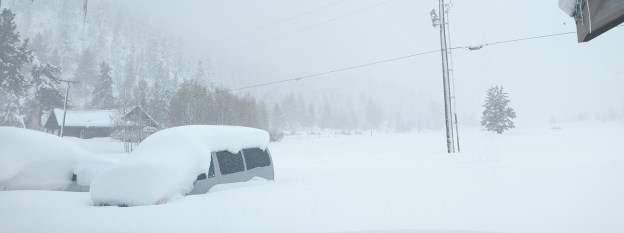
1. In the first really heavy winter storm of the year, your power might go off. This is understandable but you do have to think about it beforehand.
2. If the power’s been off for a while, like, over 24 hours, and then suddenly it comes back on for a few minutes, and then it immediately goes out again – you might understandably believe that that means that the power company is about to restore your electricity, and there was a hiccup but it’s about to come back on for real. Unfortunately, nothing in this life is knowable.
3. The instruction manuals for things – cars, snowblowers, wood stoves, etc – often have useful information about using the thing. A surprising number of my peers don’t realize this.
4. You have a lot of batteries, flashlights, shelf stable food, warm clothes, and drinking water stored, right? Good.
On shoveling snow
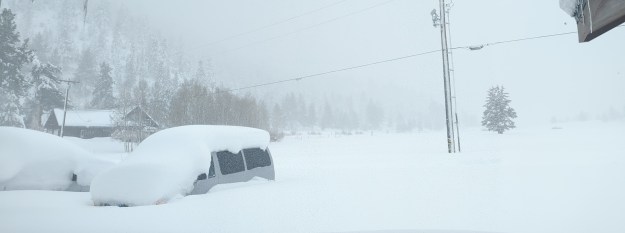
5. Snow is easiest to shovel when it’s just fallen. The more time passes, the more freeze-thaw cycles – even gentle ones – build up and make the fallen snow denser and tougher. (This might be less true in very cold places where it never gets above freezing during the day? I don’t know, honestly.)
6. Snow is heavier than you think.
You might think physical strength is useful for lots of things, like overall health or familiar household tasks or picking up dudes (literally or metaphorically.) But actually, the main thing physical strength is useful for is letting you shovel more snow.
Push comes to shove, you can probably substitute grit for physical strength. But I suspect that muscle is easier to build than grit, for most people, not to mention less injurious.
Anyway, digging snow is hard. And snow is the easiest thing you can dig. How do hobby tunnelers do it??
7. Have neighbors up the street with a snowplow. They will save your skin.
8. Speaking of snow being heavy, my Alaskan friend tells me that at some degree of snowfall, you will also want to clear snow off of your roof so that it doesn’t break your whole house. I didn’t know that. Thankfully, my roof survived (for now). There are various tools made for this, one of which is called an avalanche and looks really fun.
(I am further cautioned by a different friend that you gotta wear a hooded coat while scraping snow off the roof, or else snow will 100% fall down the back of your neck. And hey, it’s cold enough out there already.)
On being cold
9. Even if your house technically runs on propane, and you have propane, electricity might still run the propane, so your house is going to get cold. Unless you run the woodstove. Which you will.
If you’re short on kindling, sufficient cardboard CAN be used to light a big log on fire.
10. You should own rainpaints. (Or snowpants. Some kind of waterproof outer layer for your legs.)
11. If it’s too late for that, keep one pair of pants to put on when you go out into the snow for quick trips – and then immediately change into a different pair when you get back inside. This is important for staying dry.
12. Do NOT get wet and cold.
13. You already own gaiters, right? Of course you do. Gaiters are the pinnacle of fashion. Nobody realizes this, but you know that these slick garments can be made in a variety of styles, highlight the calf, and visually break up the block of the leg, adding new intrigue and aesthetic possibilities to the modern conception of dress. You are nobody’s fool, and naturally, you already own a pair of outdoors gaiters.
The situation you find yourself in now is one of the many cases where gaiters are also practical – put them on, go tromp around outside, and suddenly less snow winds up packed in your boot. It’s not a slam-dunk, because when the snow is four feet high it will also top the gaiters – what you really want is rain pants. But it’s still better than not having them, and you’ll feel real good about yourself and your practical, correct clothing takes. Good on you!
14. If possible, live in a house that a Burning Man camp runs out of in the summer. This means that even if the house is otherwise pretty well-stocked for winter storms, you will keep finding manifold useful things along the way that someone stashed in some moment of hurried summer madness, which will now make your time more pleasant – like battery powered string lights, or better shelf-stable food, or hard liquor.
In fact, in the hour of your despair (when you’re out of firewood next to the house, and the rest of the firewood is some 30 feet away but now buried under four feet of snow because you forgot to fix the roof on the woodshed during summer – and see Point 6, “Snow is heavier than you think” – and you’d have to dig your way over there and dig the wood out and then dry it, and you don’t want to do any of that) you will remember that over the summer, someone inexplicably left a garbage can full of firewood next to the truck, sealed under a plastic bag lid, and that’s only 20 feet away AND it’s already dry. You have no idea why that ended up there but in this moment it will give you strength. You can tromp over there and use a plastic child’s sled from the garage to drag wood back to the porch, and thus you will be warm another couple of nights.
On generators
15. You certainly already know: Absolutely do not run a generator inside, or “kind of inside” (open garage, etc), under any structures that contain live people or animals that you care about. This little box loves to make electricity and sparks and carbon monoxide. You must respect it.
16. In fact, any generators you may have around would look just darling in a little structure raised off the ground, with a covered roof, some 20 feet at minimum away from an occupied structure, wouldn’t they?
17. Any generators you might have around should also be checked in the fall to make sure they work, and put away at the end of winter winterized as per the manual instructions. You did that, right? Right? Uh oh.
On water
18. Your house’s well is, of course, also electricity-powered. This adds another layer of complication. You did bleach ten gallons of well water for long-term storage already earlier in the year, right? Good.
Anyway, to flush a toilet without a running tank, dump about a gallon of water right into the bowl as fast as possible. (If you do it slowly, it won’t overfill, but it won’t ‘flush’ all at once either.)
19. Even if you didn’t have plenty of drinking water stored up, you wouldn’t be in trouble, because you can fill a big cooking pot with snow and put it on top of the wood stove. But you do have a lot of bottled water. Good on you.
On morale
20. You might think, at least finally I’ll have time to read one of my many unread books or do one of several arts or crafts I have around. And you will, a little. But it will bring you no joy. You will wish you were playing Animal Crossing.
21. One of the books you’ll read is Shadows on the Koyukuk, a memoir by the son of a fur trapper & a Koyukuk Athabascan native, on his life growing up and living in Alaska in the early 1900s. It’s a great book in any circumstance. But certain parallels will occur to you now, especially. You must thicken your skin to appreciate them. For instance, author Sidney Huntington will recount how he got lost in the woods at night with damp clothes, while it was well under -30° Fahrenheit out, carrying only an axe – so he remembered some advice he’d gotten once, and chopped down some trees, and started two fires to keep him warm and let him sleep through the night until it was daylight and he could find his way home.
Not only is it about 60° warmer where you are, you’ve never even cut down ONE tree with an axe. (Or built a boat, or killed a grizzly bear, or…)
But you must remind yourself that despite your shortcomings, you almost certainly know about more kinds of fish than Huntington did at your age, so modernity has not failed you utterly. And you don’t know anyone who’s ever died from tuberculosis or starvation, which is cool too.
Your ego thus buoyed (in case you needed it), you can find common ground, for instance, about the problem of snow – Huntington mentions how when two people are walking across snowfields in snowshoes, it’s more exhausting to be the person in front breaking the trail. He and his brother would take turns. You can relate to this, now. The second time walking over a path really is easier.
On anabasis
22. While making your little plans, at some point, you will learn – using the threads of cell power you’re able to obtain from the last live power bank you didn’t even know was in the house until you tore through it looking for one – that another storm is due in the next couple days, and that the power company has no ETA on a repair. You will look at your dwindling supply of easily available firewood. You will look at your to-do list:
a) dig out enough space for the large generator, which you think might be more likely to turn on than the small one
b) dig out the truck, just in case
You will look at your two “uh, yeah, I have a blog” noodle arms. You will consider Point 6.
Spend your energy digging the truck out. Throw some clothes inside. Get the hell out of there.
23. You already know that if you’re trying to drive a car over snowy ground, and the wheels start spinning but the car is stuck in place, you need to stop doing what you’re doing right away and try doing something else with the wheels, right? Good.
Support Eukaryote Writes Blog on Patreon.
Edit: Hello, Hacker News! Really did not expect this post in particular to get big there but I’m glad it did.
Thank you to those of you who shared suggestions and advice! Readers looking for advice can view these comments for more opinions on the problem of snow.
If you’re new here and you’d like to learn more about adventures with nature in my part of the world, check out my piece on Sin Nombre virus! If you want to read about more of my questionable choices, here’s the time I got dysentery on purpose!
To address some points raised by HN commenters:
A: I live in a very rural part of the US.
B: I already live in California. Parts of California are like this.
C: I didn’t mention flushing the toilet by refilling the tank (rather than by dumping water in the bowl) because… I didn’t think of that. It is an extra step because you have to mess with the tank lid, but it has other upsides. Thank you for the advice.
Shout-out to the person who proposed this article was AI-written because a human being would have thought of this. I just asked Claude Sonnet 4.5 how to flush a toilet without running water and he immediately suggested both approaches. No, transformative AI has simply surpassed my personal human capabilities in the area of how to flush a toilet without running water.
D: The tone of this piece is comedic on purpose. I was going to put a note at the top like: “Disclaimer: everything described here is universally applicable” but decided the audience would figure it out. Maybe I flew too close to the sun. But there are trade-offs, you know? Anyway, this is certainly not a full list of advice from a seasoned (heh) expert, just some tales from a person living in a snowy place for the first time who survived the experience.
And you might think “yeah, okay, real nice job with that, dumbass” – but listen, a few years ago, I was living in a not-very-snowy city, with a rare dusting of snow on the ground. And I left my apartment for the first time in days for a stupid little 10-minute walk for my stupid little mental health, and I slipped on a patch of ice on a sidewalk and broke my wrist so badly it needed surgery. So this is a pretty successful winter for me so far, compared to that.
 Eukaryote Writes Blog
Pingback: Lessons you will learn living in a snowy place - CodeGurus - CodeGurus
At least in Finland roofs have been designed to bear so much weight that removing snow from the roof is completely unnecessary – and dangerous if try to do it from the roof.
LikeLike
Pingback: Hacker News 今日TOP 20| 2026-02-11 - 出海掘金,无限可能。为独立开发者、跨境电商从业者、海外自媒体提供最新出海资讯和资源-出海掘金,无限可能。为独立开发者、跨境电商从业者、海外自媒体æ�